
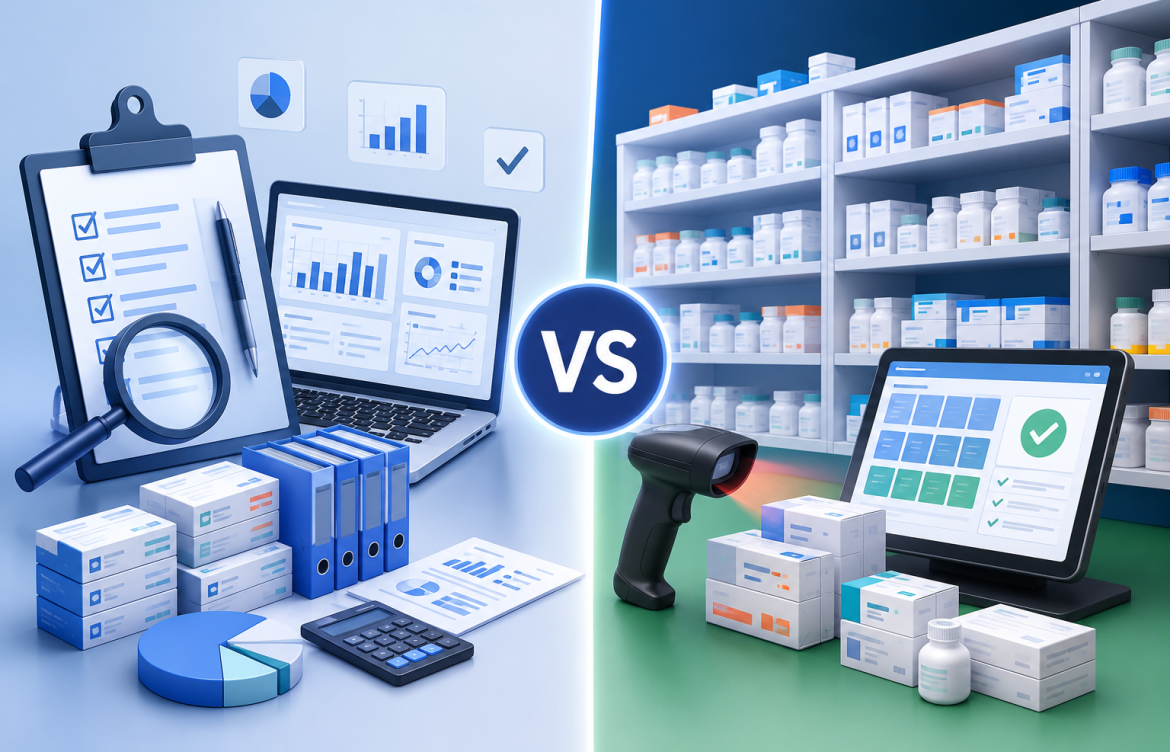
Inventory Audit vs Stock Verification: What’s the Difference?
Accurate inventory is essential for every retail pharmacy. Understanding inventory audit vs stock verification helps pharmacy owners maintain stock accuracy, reduce discrepancies, and improve inventory control. Incorrect inventory records can result in medicine shortages, excess stock, and unnecessary financial losses. Although inventory audits and stock verification are closely related, each plays a distinct role in ensuring efficient pharmacy operations and informed business decisions.
Table of Contents
- What Is Inventory Audit?
- What Is Stock Verification?
- Inventory Audit vs Stock Verification
- Why Both Are Important
- How Digital Pharmacy Software Helps
- In Short
- Frequently Asked Questions
What Is Inventory Audit?
An inventory audit is a detailed review of inventory records to verify that stock data matches actual inventory and financial records. It helps identify discrepancies, improve inventory accuracy, and support better business planning.
Inventory audits are generally conducted periodically to evaluate the overall health of inventory management.
What Is Stock Verification?
Stock verification is the physical process of counting medicines available in the pharmacy and comparing them with system records. It is performed regularly to ensure stock quantities remain accurate.
Frequent stock verification helps identify missing items, counting errors, or differences between physical stock and software records before they become larger problems.
Inventory Audit vs Stock Verification
Although both processes focus on inventory accuracy, they have different objectives.
| Inventory Audit | Stock Verification |
|---|---|
| Reviews inventory records and processes | Confirms physical stock quantities |
| Conducted periodically | Performed more frequently |
| Supports financial accuracy | Supports daily inventory accuracy |
| Identifies process improvements | Identifies quantity mismatches |
Using both methods together provides better visibility into pharmacy operations and reduces inventory-related risks.
Why Both Are Important
Maintaining accurate inventory benefits both pharmacy operations and customer service. Regular reviews can help:
- Improve inventory accuracy
- Reduce stock discrepancies
- Support better purchasing decisions
- Minimise medicine shortages
- Reduce manual errors
- Improve operational efficiency
How Digital Pharmacy Software Helps
Managing inventory manually becomes difficult as business volume grows. A pharmacy management software solution automates inventory tracking, records stock movements, and simplifies verification activities.
Solutions like EcoGreen Express provide real-time inventory visibility, helping pharmacy owners identify discrepancies quickly and generate reports that support informed decision-making.
You can also learn more about pharmacy inventory management by reading the related guide on the C-Square website.
In Short
Inventory audits and stock verification work together to improve inventory accuracy. While one focuses on reviewing records and processes, the other confirms physical stock availability. Implementing both practices helps retail pharmacies reduce errors, improve stock control, and make better business decisions.
Digital solutions such as EcoGreen Express further simplify these activities by providing accurate inventory information through a single platform.
Frequently Asked Questions
What is the difference between an inventory audit and stock verification?
An inventory audit reviews inventory records and processes, while stock verification confirms the actual quantity of medicines available.
How often should stock verification be performed?
Many pharmacies perform stock verification regularly based on inventory movement, while audits are usually conducted periodically.
Why are both processes important?
Together, they improve inventory accuracy, reduce discrepancies, and support better operational decisions.
Can pharmacy software simplify inventory management?
Yes. Modern pharmacy management software automates inventory tracking, reporting, and verification, helping pharmacies maintain accurate stock records.